Enhancing Glaucoma Detection through Optic Disc and Cup Segmentation in Fundus Images
Yenchieh Wang Youyuan Hu
yenchieh.wang@duke.edu yh403@duke.edu
| Paper PDF |
|
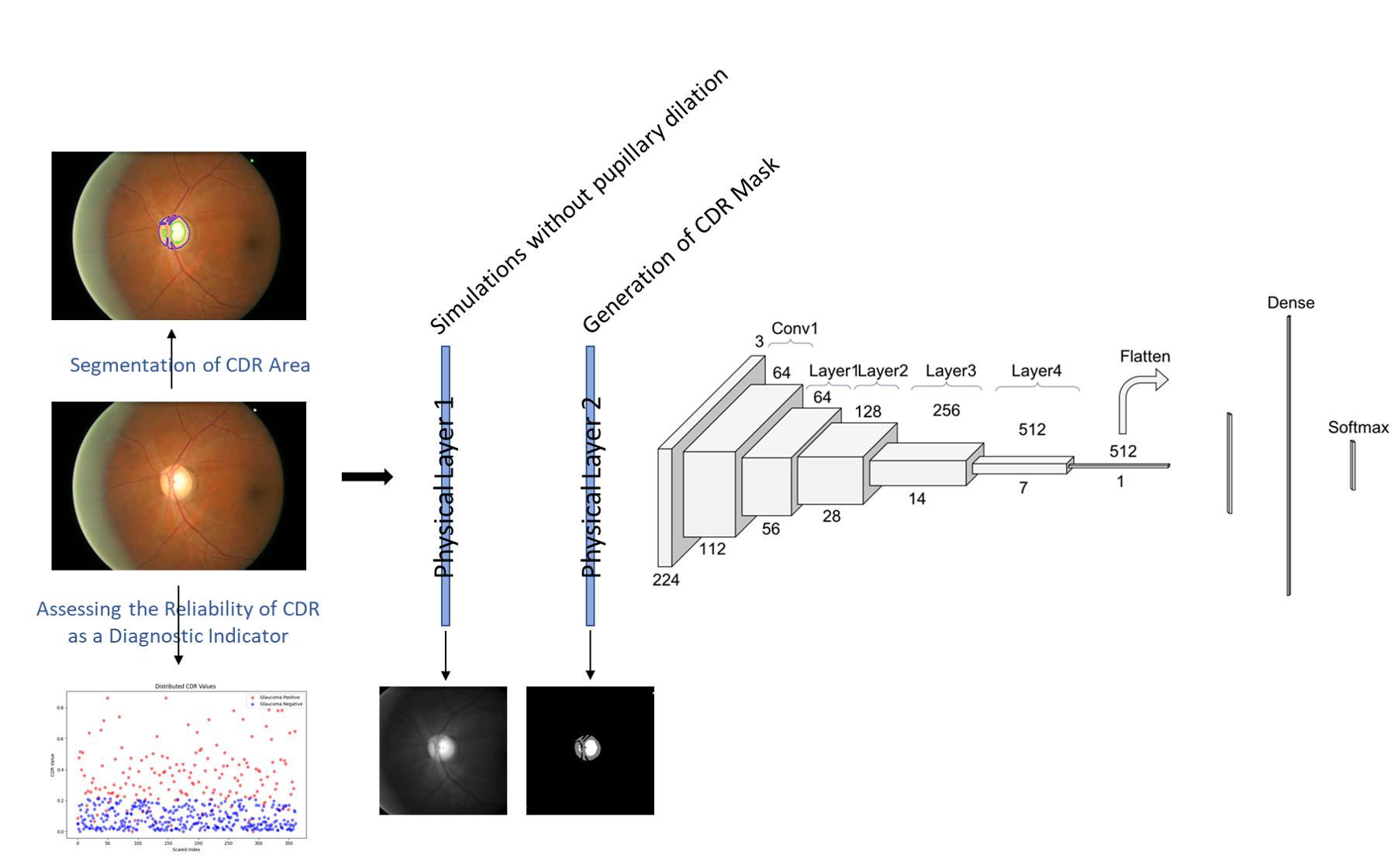
In the fight against glaucoma, early detection is crucial, but traditional methods can be challenging for patients who cannot undergo standard procedures. In response, we've developed an innovative approach using funduscopic imaging that leverages machine learning to enhance the detection capabilities under various imaging conditions. Our method centers on analyzing the Optic Nerve Cup-to-Disc Ratio (CDR), a key indicator of potential glaucoma. By creating precise masks of the CDR from high-resolution images, our model significantly improves its ability to identify glaucomatous changes, maintaining high accuracy even in less-than-ideal conditions such as blurred or dimly lit images. This breakthrough offers a promising new tool for clinicians, potentially transforming how we screen for and diagnose glaucoma, making the process more accessible and reliable for all patients. The effectiveness of this technique under varied conditions not only underscores its clinical value but also sets the stage for its adoption in healthcare settings worldwide. |
|
|
| Paper: |
Code and Data:
|