Learnable Quantization and Lesion Area Segmentation for COVID-19 lungs’ CT images
Hanyou Cao Libo Zhang Sizhe Kuang Sihan Lyu
hc288@duke.edu lz200@duke.edu sk6790@duke.edu sl761@duke.edu
| Paper PDF |
|
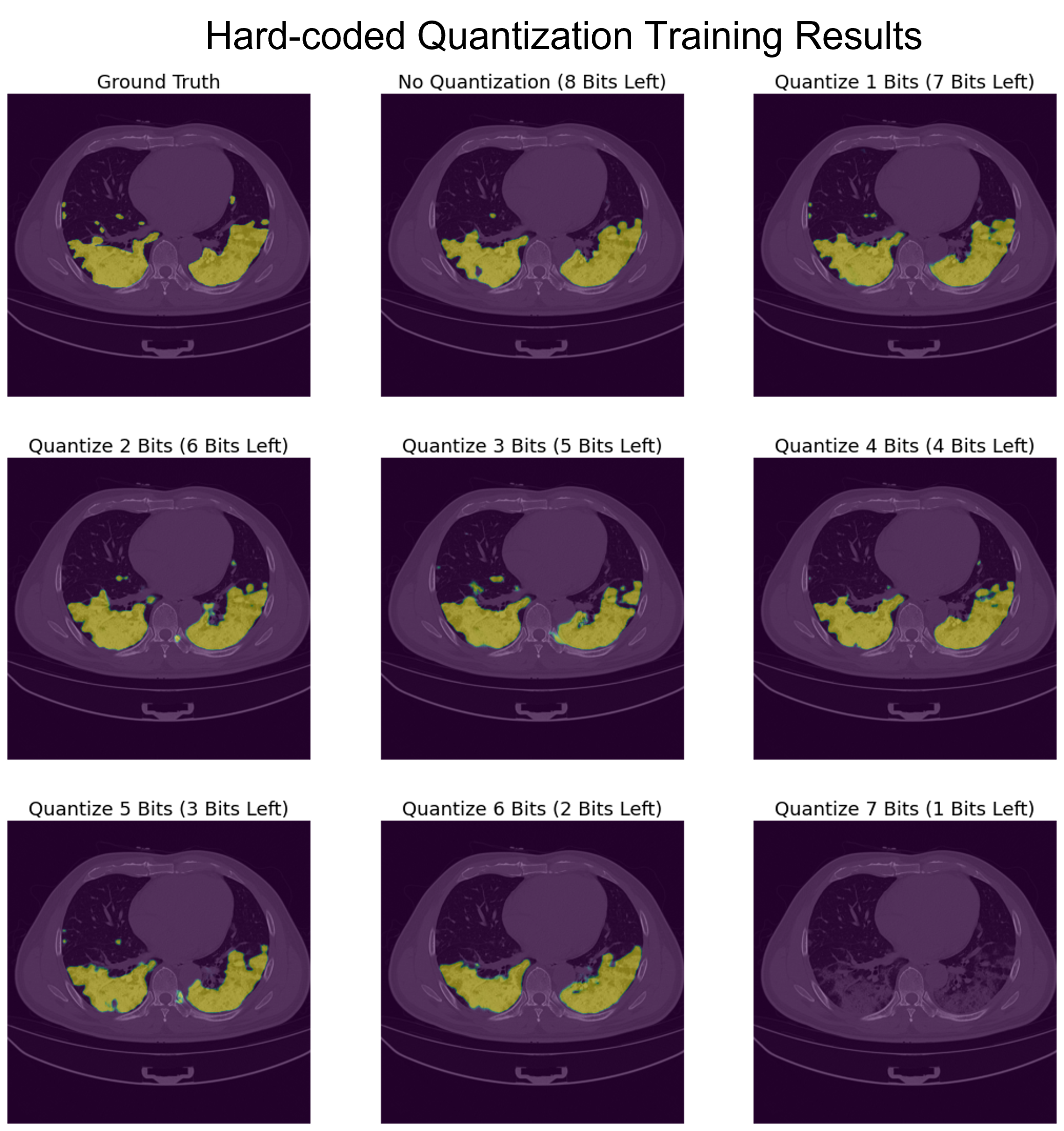
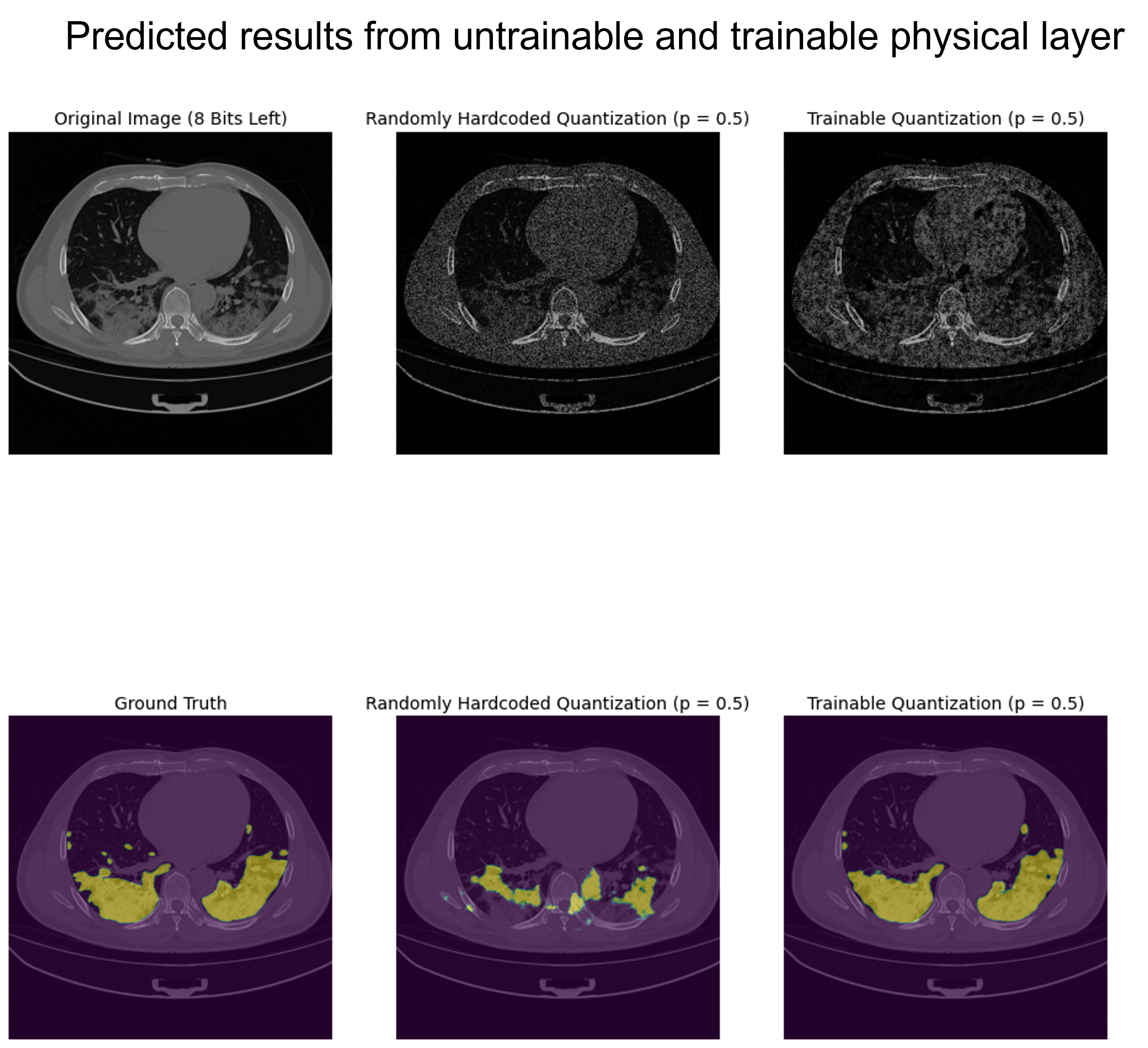
Recently the most infectious disease is the novel Coronavirus disease (COVID 19) creates a devastating effect on public health in more than 200 countries in the world. Right now, although RT-PCR which is a cost-effective and convenient strategy applied to detect coronavirus disease, is the most common diagnosis for COVID-19, it is still too time-consuming and error prone. Especially in such a critical situation, billions of people may require diagnostic tests every day. The alternative detection method is lung CT images which is more reliable, since viral infection in the lung is one of the most common early indicators of this disease. However, there are still several challenges restricting the application of this method, including high variation in lesion characteristics and low contrast between lesion areas and healthy tissues. Here, we decided to propose a trainable physical layer and a UNet to segment lesion regions from lungs’ CT image. With this model we can not only help agents to diagnose coronavirus disease accurately and efficiently but also help to judge the severity of damage in patients’ lungs. |
|
|
| The related paper is shown here: |
| Code and Data: |